
Should You Make One Extra Loan Payment Every Year?

Making one extra loan payment a year is one of the simplest ways to pay off a loan faster without changing your monthly budget much. It works by shrinking your principal balance ahead of schedule, which reduces the interest that accrues on every payment afterward.
Whether it’s worth doing depends on your interest rate, how much spare cash you actually have, and what else that money could be doing for you — like paying off higher-interest debt or building an emergency fund. This article walks through how the strategy works, what it saves in real numbers, when it makes sense, and how to set it up correctly so the extra money actually goes toward your principal.
How One Extra Payment a Year Works
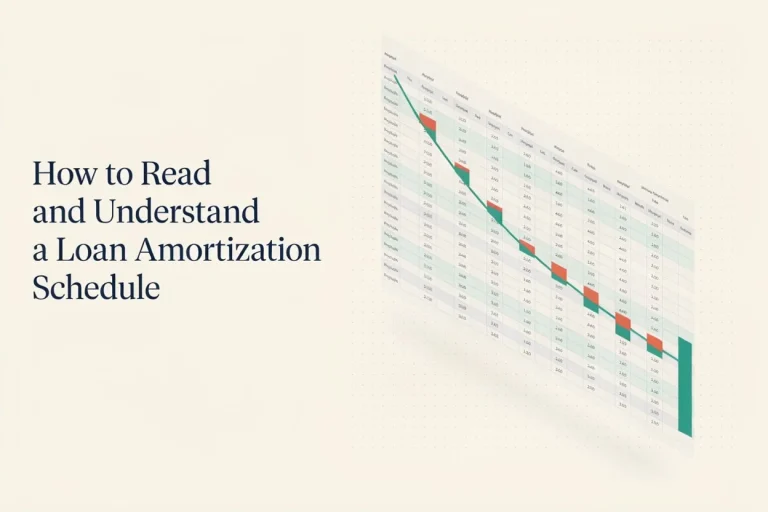
Most installment loans — mortgages, auto loans, personal loans — are amortized. Each regular payment is split between interest (calculated on your current balance) and principal (which reduces what you owe). Early in the loan, more of each payment goes to interest; later, more goes to principal.
When you make one extra payment a year, that entire amount is applied to your principal balance (assuming your lender processes it correctly — more on that below). A lower principal balance means less interest accrues going forward, which means more of each future regular payment goes toward principal instead of interest. This creates a snowball effect: the loan pays itself off faster than the original schedule, and the total interest you pay over the life of the loan drops.
There are two common ways borrowers do this:
- One true extra payment — an amount equal to a full regular payment, made once a year, separate from your normal payments.
- Spread across the year — dividing that extra payment by 12 and adding a small amount to every monthly payment (for example, paying 1/12 extra each month equals one full extra payment by year’s end).
Both approaches produce the same result if the extra amount is applied to principal at the same points in the schedule; spreading it out slightly front-loads the benefit since the balance drops sooner.
The Math: A Real Example
Example assumptions
- Loan balance: $250,000
- Interest rate: 6.5% fixed
- Loan term: 30 years (360 months)
- Extra payment: one additional full monthly payment ($1,580.17) applied to principal each year
| Standard schedule | One extra payment/year | |
|---|---|---|
| Payoff time | 30 years | About 24.3 years |
| Total interest paid | $318,861 | $248,874 |
| Interest saved | — | About $69,987 |
| Time saved | — | About 5.7 years |
This example uses a fixed-rate, fully amortizing loan with no prepayment penalty, where the extra payment is applied directly to principal in the same month each year. Your own numbers will differ based on your loan’s rate, remaining balance, and how many years are left.
For a smaller loan, the dollar savings are naturally smaller but still meaningful. On a $20,000 loan at 7% with a 5-year term, one extra full payment a year shortens the loan by about 4 months and saves roughly $287 in interest — a modest amount, but the shorter the loan and lower the rate, the smaller the relative benefit of extra payments becomes.
The takeaway: the strategy saves the most on loans with a large balance, a long remaining term, and a higher interest rate — mortgages being the classic case. On short-term or low-rate loans, the payoff is real but smaller.
Use the Loan Payoff Calculator to run this scenario with your actual balance, rate, and term instead of these example figures.
Important Factors That Affect the Outcome
How your lender applies extra payments. Not all lenders automatically apply extra money to principal. Some apply it to next month’s payment instead, which delays your due date but doesn’t reduce total interest the same way. Always confirm with your servicer — many require you to specify “apply to principal” in writing, online, or by phone.
Prepayment penalties. Some loans, particularly certain personal loans, older auto loans, or commercial loans, include a prepayment penalty or fee for paying down principal faster than scheduled. Check your loan agreement or ask your servicer before assuming extra payments are free to make.
Fixed vs. variable rate. On a fixed-rate loan, the savings calculation is predictable. On a variable-rate loan, future rate changes affect how much benefit you actually get from paying down principal early, since the interest savings depend on rates you can’t fully know in advance.
Timing within the year. An extra payment made earlier in the year (or earlier in the loan term) reduces the balance sooner and compounds the savings slightly more than the same payment made later.
Interest calculation method. Most consumer installment loans use simple daily or monthly interest on the outstanding balance, which is what makes extra principal payments effective. A small number of loans use other structures (like precomputed interest), where early payoff doesn’t reduce interest the same way — worth confirming for older or non-standard loans.
When Making an Extra Payment a Year Makes Sense
- You have a fixed-rate loan with several years or more remaining, especially a mortgage.
- You don’t have higher-interest debt (like credit cards) that would save you more by being paid down first.
- You already have an emergency fund and aren’t sacrificing liquidity to make the payment.
- Your lender confirms extra payments are applied to principal with no penalty.
- You want a guaranteed, risk-free return equal to your loan’s interest rate — which extra principal payments effectively deliver.
When It May Not Make Sense
- You’re carrying higher-interest debt elsewhere. Paying off a 22% credit card takes priority over an extra payment on a 6% loan.
- You don’t have three to six months of expenses saved. Locking money into a loan reduces your flexibility if you need cash quickly.
- Your loan has a meaningful prepayment penalty that offsets the interest savings.
- You’re early in a low-rate loan and have better use for the money, such as retirement contributions with an employer match.
- Cash flow is tight enough that a large annual lump sum would be a strain rather than a comfortable extra.
Common Mistakes to Avoid
Assuming the payment automatically goes to principal. Many borrowers make an extra payment only to find it was applied to future interest or held as a “payment ahead” credit instead of reducing the balance. Confirm this every time, not just once.
Not checking for a prepayment penalty first. Paying a penalty can wipe out some or all of the interest savings, especially in the first few years of certain loans.
Treating it as untouchable once committed. An extra payment is optional by nature. If a real financial need comes up, it’s fine to skip a year — this isn’t a contractual obligation like your regular payment.
Ignoring higher-interest debt. Extra payments only make sense once higher-rate balances elsewhere are addressed; otherwise you’re saving less than you could.
Practical Steps to Do This Correctly
- Confirm with your lender or servicer, in writing if possible, that extra payments are applied directly to principal.
- Check your loan documents for any prepayment penalty clause.
- Decide whether to make one lump-sum payment annually or split it across 12 months — pick whichever is easier to sustain.
- Set a recurring reminder or automatic transfer so the payment happens consistently rather than depending on memory.
- Recalculate your updated payoff timeline and interest savings periodically as your balance changes.
Use the Loan Payoff Calculator to compare your current payoff schedule against different extra-payment amounts and see how the numbers shift as your balance goes down.
FAQ
Does one extra payment a year always save the same amount of interest? No. Savings depend on your interest rate, remaining balance, remaining term, and when in the year the payment is applied. A higher rate and longer remaining term generally produce larger savings.
Is it better to make one big payment or spread it across 12 months? Both save a similar amount over time. Spreading it out slightly increases the benefit because the balance is reduced sooner in the year, but the difference is usually small. Choose whichever is easier to budget for consistently.
Will my lender automatically apply extra payments to principal? Not always. Many lenders require you to specify that the payment should go to principal, either through an online portal, a note with a mailed check, or a phone request. Confirm this before assuming it worked as intended.
Does this work the same way for auto loans and personal loans as it does for mortgages? The mechanics are the same, but the dollar savings are usually smaller because those loans typically have shorter terms and smaller balances than a mortgage. Check for prepayment penalties, which are more common on some personal and auto loans.
Should I make extra payments if I have credit card debt too? Generally, no — pay down higher-interest debt like credit cards first. An extra loan payment is most worthwhile once you don’t have higher-rate balances working against you.
What if I can’t afford a full extra payment some years? Any additional principal payment helps, even a partial one. The strategy doesn’t require a full extra payment every single year to produce meaningful savings over time.
Conclusion
One extra loan payment a year is a straightforward way to reduce total interest and shorten your payoff timeline, and it works best on loans with a large balance, a longer remaining term, and a fixed interest rate. The savings are real but not universal — they’re smaller on short-term or low-balance loans, and the strategy only makes sense once you’ve confirmed there’s no prepayment penalty and you don’t have higher-interest debt to address first.
Before committing to this approach, confirm with your lender exactly how extra payments are applied, and run your own numbers rather than relying on general examples. Use the Loan Payoff Calculator to see exactly how much time and interest you’d save based on your actual loan balance, rate, and term.

About Author
Blake is a personal finance blogger who writes about loan repayment strategies, debt management, and practical ways to pay off loans faster. He focuses on simplifying complex loan concepts using real-world examples and easy-to-use financial tools through LoanPayoffCalc.com. Learn More